Four Great Inventions of China
Introduction
The Four Great Inventions of China refer to the ancient Chinese innovations that had a significant impact on the cultural and economic development of the world. These inventions, which include papermaking, gunpowder, the compass, and printing techniques, are often cited as symbols of China's advanced science and technology in ancient times. Each of these inventions played a crucial role in the development of human civilization, contributing to a wide range of fields, including literature, navigation, warfare, and communication.
Papermaking
Papermaking is perhaps the most influential of the Four Great Inventions. It fundamentally transformed the way information was recorded and disseminated. The earliest form of paper was made from mulberry bark and hemp, with Cai Lun, an official of the Eastern Han Dynasty (25-220), traditionally credited with its invention. The process was refined over the centuries, and by the Tang Dynasty (618-907), Xuan paper had become well-known for its quality, becoming a significant cultural artifact.
Xuan Paper
Xuan paper, originating from Jingxian county in Xuancheng, Anhui province, is a traditional handmade paper renowned for its connections to Chinese calligraphy and ink paintings. The papermaking process involves a blend of sandalwood bark, rice straw, and water from mountain streams. This meticulous method demands skilled craftsmanship, as demonstrated by the laozhi technique, a crucial step in forming the paper sheet from pulp.
Xuan paper is especially prized for its ability to display various shades of ink, its stability, durability, and insect resistance. It has been favored by calligraphers and painters throughout history for its capability to enhance the expression of artistic works. As such, it has been integral to the preservation of ancient documents, paintings, and calligraphic pieces.
In 2009, the traditional craft of making Xuan paper was recognized by UNESCO and inscribed on the Representative List of the Intangible Cultural Heritage of Humanity, highlighting its cultural significance and the need for its preservation.
Gunpowder
Gunpowder was another transformative invention, originating from the experimentation of Chinese alchemists seeking to create an elixir of immortality. As early as the 9th century, gunpowder was used in the Tang Dynasty (618-907), and its application in warfare revolutionized military tactics and weaponry. The invention of gunpowder led to the creation of various forms of explosives and firearms, fundamentally altering the course of history in warfare and beyond.
The Compass
The invention of the compass had a profound impact on navigation, enabling explorers and traders to determine direction more accurately and venture across seas and unknown territories with increased confidence. The earliest compasses were made during the Han Dynasty (206BC-AD220) and were primarily used for divination. However, their application in navigation during the Song Dynasty (960-1279) helped facilitate maritime exploration and the expansion of trade routes, contributing significantly to global interactions and exchanges.
Printing Techniques
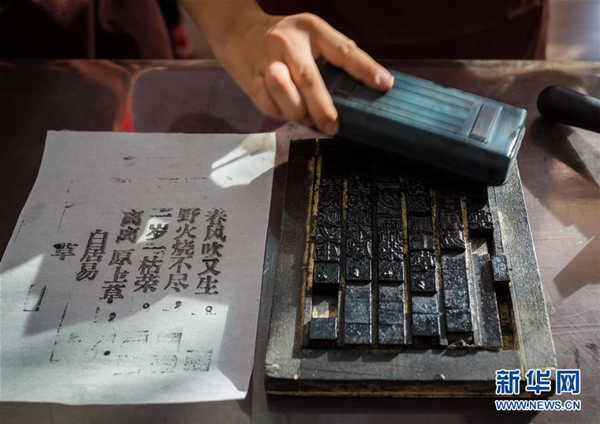
The development of printing techniques, particularly woodblock printing and movable type printing, revolutionized the dissemination of information. The ability to reproduce texts efficiently allowed for the spread of knowledge, literacy, and education. Woodblock printing emerged during the Tang Dynasty, with the Diamond Sutra, printed in 868, being the world's oldest known woodblock printed book. Later, during the Song Dynasty, the movable type printing technique was developed, further enhancing the printing process and influencing the spread of culture and ideas.
Legacy and Cultural Impact
The Four Great Inventions not only reflect the ingenuity and creativity of ancient Chinese civilization but also demonstrate how these innovations transcended cultural boundaries and shaped the development of the modern world. Papermaking facilitated the spread of literature and knowledge, gunpowder reshaped warfare, the compass opened new horizons for exploration, and printing revolutionized communication. These inventions highlight China's historical contributions to global progress and underscore the enduring legacy of Chinese innovation.
In contemporary times, efforts to preserve and promote the cultural heritage associated with these inventions continue. Traditional papermaking, for instance, is still practiced and celebrated, with craftspeople in regions like Jingxian dedicated to maintaining the techniques and artistry of Xuan paper production. As globalization and modernization progress, the Four Great Inventions serve as a reminder of the importance of cultural heritage and the impact of innovation on human civilization.








